
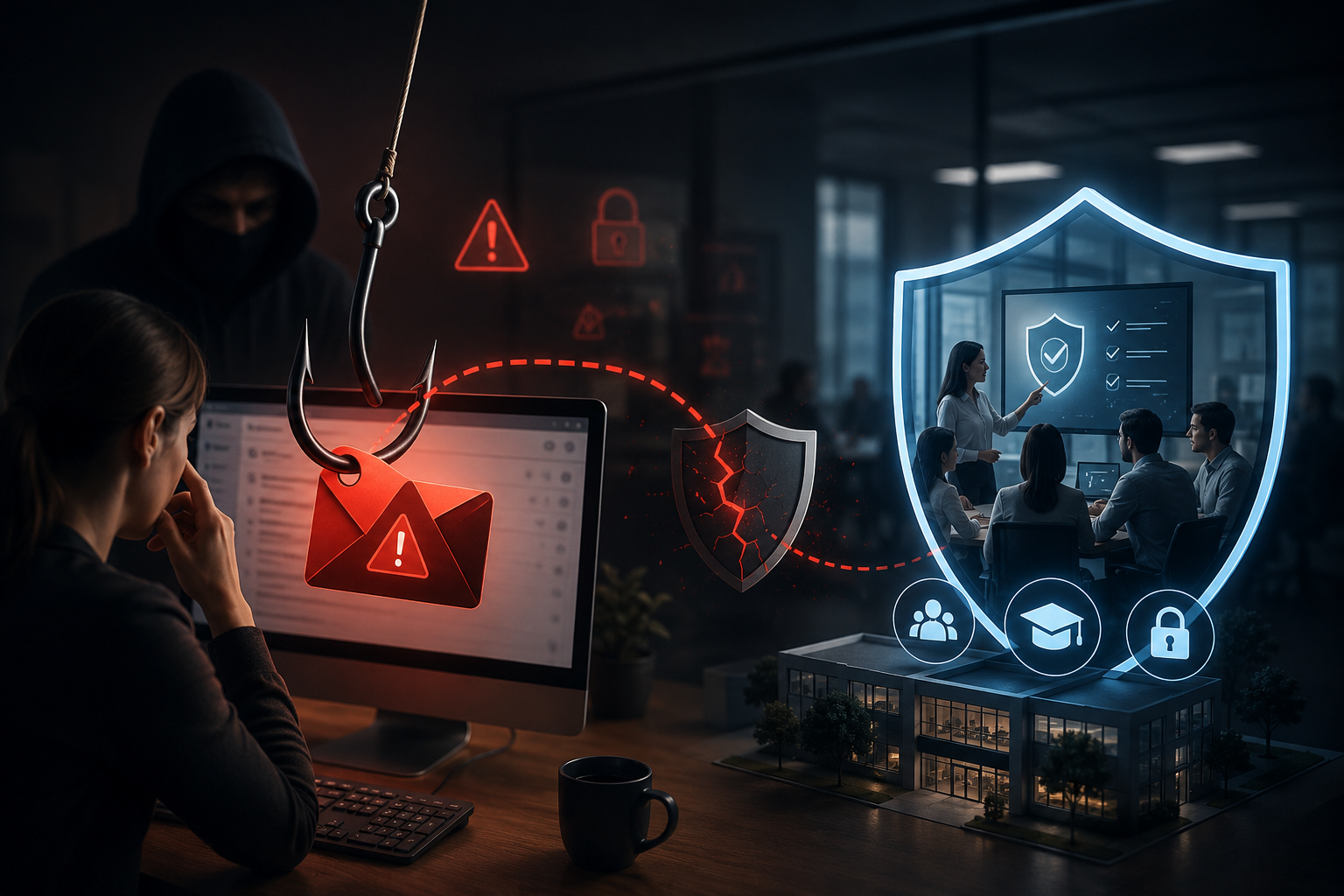
Most small business phishing defense strategy efforts fall short because they overlook one big risk: human error. Your employees face smarter, more convincing phishing scams every day. Without sharp employee security awareness training SMB, a single mistake can lead to costly cyber data breaches. This post will show why common approaches fail and how human error cybersecurity solutions can better protect your business.
The Hidden Vulnerability in Your Security Infrastructure
Your firewall is strong. Your antivirus software updates automatically. You have invested in the latest security tools. Yet your business remains at risk. The reason is simple: technology alone cannot protect you from the most common entry point for cybercriminals. Your employees represent both your greatest asset and your most significant vulnerability.
Statistics reveal a troubling reality. Over 90% of successful cyberattacks begin with human error. An employee clicks a malicious link. Someone opens an infected attachment. A team member shares credentials with what appears to be a legitimate request. These simple mistakes bypass even the most sophisticated security systems.
For security compliance officers and business owners managing sensitive client data, this reality creates constant anxiety. You understand the stakes. A single breach can destroy client trust, trigger regulatory penalties, and damage your reputation beyond repair. Traditional security measures simply do not address the core problem.
Why Traditional Small Business Phishing Defense Strategy Falls Short
Most organizations approach cybersecurity with a technology-first mindset. They purchase software, install firewalls, and believe they have solved the problem. This approach fails because it ignores the human element entirely.
Consider the typical small business phishing defense strategy. Companies install email filters designed to catch suspicious messages. These filters work well against known threats. Cybercriminals, though, constantly adapt their tactics. They craft messages that appear legitimate, bypass automated detection, and land directly in employee inboxes.
The emails look authentic. They use company logos, mimic executive communication styles, and create urgent scenarios that prompt immediate action. An employee receives what appears to be a message from the CEO requesting an urgent wire transfer. The email address looks correct at first glance. The signature matches perfectly. The employee, wanting to be responsive and helpful, complies.
This scenario plays out thousands of times daily across small and medium-sized businesses. The financial and reputational costs are staggering. Yet organizations continue to rely on the same inadequate defenses.
The True Cost of Cyber Data Breaches
Understanding the full impact of a data breach requires looking beyond immediate financial losses. When sensitive client information falls into the wrong hands, your business faces multiple catastrophic consequences.
Direct financial costs include forensic investigations, legal fees, regulatory fines, and potential lawsuit settlements. These expenses can easily reach hundreds of thousands of dollars, even for small breaches. Many small businesses never recover financially from a significant incident.
Reputation damage often proves even more devastating. Clients trust you with their most sensitive information. When that trust breaks, rebuilding it becomes nearly impossible. Competitors quickly capitalize on your vulnerability. Prospects choose other providers. Your market position erodes rapidly.
Regulatory compliance adds another layer of complexity. Industries handling healthcare data, financial information, or personal customer details face strict reporting requirements and substantial penalties for breaches. Compliance officers understand the weight of this responsibility. A single incident can trigger years of increased scrutiny and mandatory audits.
Operational disruption compounds these challenges. Following a breach, your team must focus on containment, investigation, and remediation rather than serving clients and growing the business. Productivity plummets. Employee morale suffers. Recovery can take months or even years.
Human Error Cybersecurity Solutions: A Comprehensive Approach
Effective protection requires addressing the human element directly. Human error cybersecurity solutions recognize that your employees need specific skills and knowledge to identify and respond to threats appropriately.
This approach begins with understanding how people actually work. Employees face constant pressure to respond quickly, meet deadlines, and handle multiple priorities simultaneously. In this environment, careful scrutiny of every email becomes difficult. Cybercriminals exploit this reality by creating scenarios that trigger emotional responses and bypass rational analysis.
Comprehensive solutions combine multiple elements. First, they provide ongoing education that keeps pace with evolving threats. Phishing tactics change constantly. Training must reflect current attack methods, not outdated examples from years past.
Second, effective programs create practical experience through simulated attacks. Employees learn to recognize threats by encountering realistic examples in a safe environment. This hands-on approach builds muscle memory and confidence. When a real attack occurs, trained employees can identify and report it immediately.
Third, strong programs establish clear reporting procedures and create a culture where employees feel comfortable admitting mistakes. Many breaches worsen because employees fear punishment and delay reporting suspicious activity. Organizations that respond to reports with support rather than blame create stronger defenses.
Employee Security Awareness Training SMB: Building Your First Line of Defense
Employee security awareness training SMB programs must address the specific challenges small and medium-sized businesses face. Unlike large enterprises with dedicated security teams, smaller organizations rely on every employee to serve as a security defender.
Effective training starts with the basics. Employees need to understand common attack vectors, including phishing emails, social engineering tactics, and malicious websites. They should learn to scrutinize sender addresses, verify unusual requests through secondary channels, and recognize urgency tactics designed to bypass their judgment.
Training must extend beyond initial onboarding. Quarterly or monthly sessions keep security top of mind and address new threat types as they emerge. Short, focused sessions prove more effective than lengthy annual trainings that employees forget within weeks.
Role-specific training addresses the unique risks different team members face. Executives and managers become targets for sophisticated spear-phishing attacks. Finance team members must verify payment requests through multiple channels. Customer service representatives need to recognize social engineering attempts during client interactions.
Testing complements education. Regular simulated phishing campaigns measure how well employees apply their training. These tests should not aim to trick or embarrass staff. Instead, they provide learning opportunities and help identify areas where additional training would be beneficial.
Phishing Attack Prevention for Small Business: Practical Strategies
Phishing attack prevention for small business requires layering multiple defensive strategies. No single approach provides complete protection. Combined measures create overlapping safeguards that catch threats other defenses miss.
Technical controls form the foundation. Email authentication protocols like SPF, DKIM, and DMARC help verify sender legitimacy. Advanced email filtering solutions use artificial intelligence to detect suspicious patterns. Multi-factor authentication prevents credential theft from leading to account compromise.
These technical measures work best when combined with human vigilance. Employees trained to verify unexpected requests through phone calls or in-person conversations add a critical verification step. A simple policy requiring verbal confirmation for financial transactions or data requests blocks many attacks.
Clear procedures empower employees to act confidently. When someone receives a suspicious email, they should know exactly how to report it, who to contact, and what steps to take. Quick reporting allows security teams to warn other employees and prevent additional victims.
Regular communication keeps security awareness high. Brief weekly reminders, examples of recent attack attempts, and recognition for employees who identify threats all reinforce the importance of vigilance. Security becomes part of your organizational culture rather than an occasional concern.
Ransomware Protection Corporate Training: Preparing for the Worst
Ransomware represents one of the most destructive threats businesses face. Attackers encrypt critical files and demand payment for restoration. Even organizations that pay ransoms often cannot fully recover their data. Prevention proves far more effective than response.
Ransomware protection corporate training teaches employees to recognize the warning signs of ransomware attacks. Many incidents begin with phishing emails containing malicious attachments or links. Employees who can identify these threats stop attacks before they begin.
Training should cover safe browsing practices, the risks of downloading files from untrusted sources, and the importance of keeping software updated. Employees need to understand that seemingly innocent actions can have catastrophic consequences.
Backup procedures provide essential insurance. Regular, tested backups stored separately from production systems allow organizations to restore operations without paying ransoms. Employees should understand their role in backup processes and why these procedures matter.
Incident response planning prepares your team to act quickly if an attack succeeds despite preventive measures. Employees should know how to recognize a ransomware infection, who to notify immediately, and what steps to take to contain the damage. Minutes matter in these situations. Prepared teams minimize harm.
24/7 Cyber Threat Protection: Continuous Vigilance
Cyber threats do not respect business hours. Attackers often launch campaigns during evenings, weekends, or holidays when security teams may be less alert. Effective defense requires 24/7 cyber threat protection that monitors for threats around the clock.
For many small and medium-sized businesses, maintaining an in-house security operations center proves financially impractical. Managed security service providers offer an alternative, providing expert monitoring and response without the overhead of full-time staff.
These services complement employee training by adding professional oversight. While trained employees provide frontline defense during business hours, security professionals monitor systems continuously, detect anomalies, and respond to incidents whenever they occur.
Real-time threat intelligence keeps defenses current. Security providers track emerging threats globally and update protections across all clients simultaneously. Your business benefits from collective intelligence gathered across thousands of organizations.
Automated response capabilities enable immediate action against detected threats. Systems can automatically isolate infected devices, block malicious IP addresses, and alert relevant personnel within seconds of detecting suspicious activity. This speed proves critical for containing threats before they spread.
Building a Security-First Culture
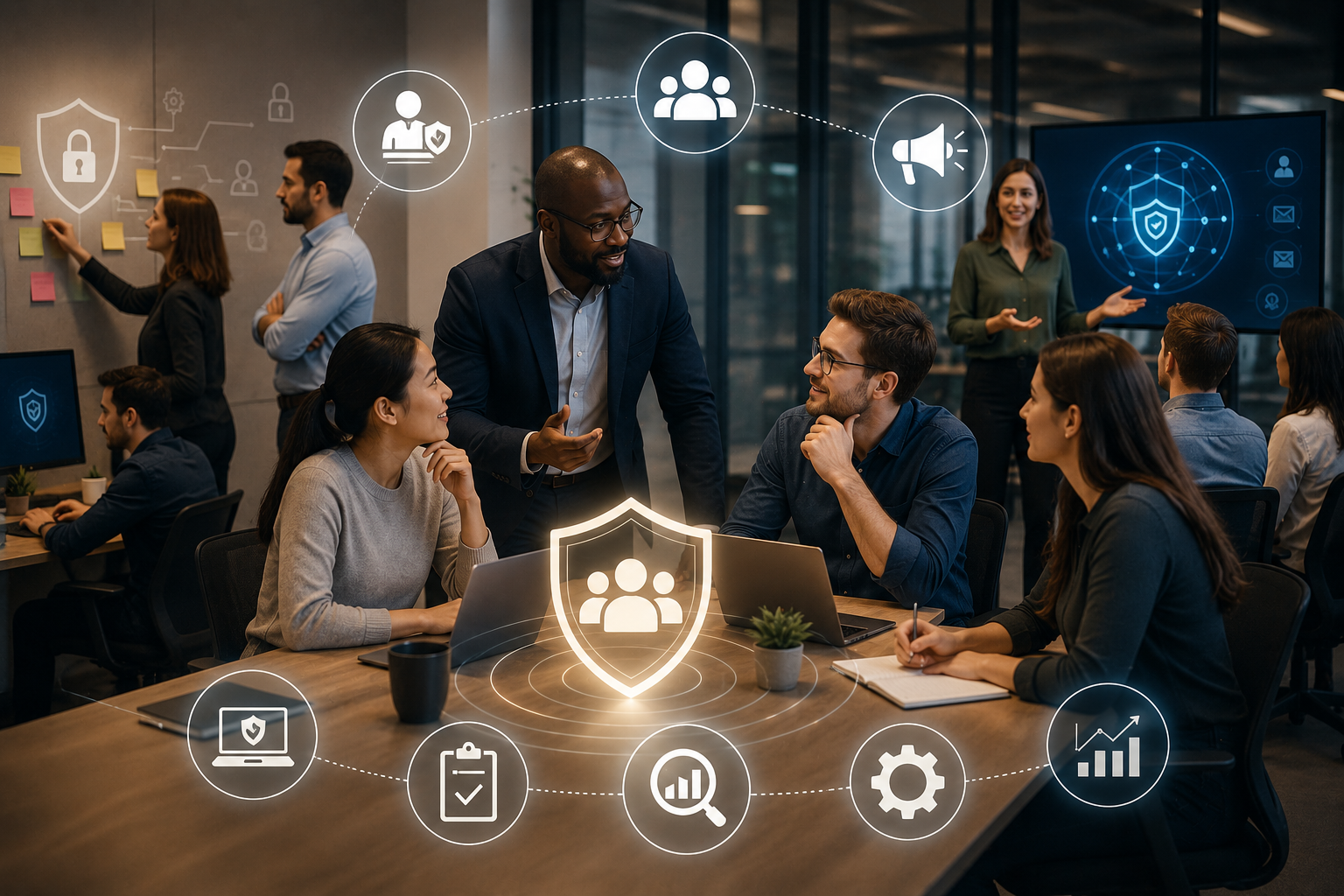
Technology and training provide essential tools, but lasting protection requires cultural change. Organizations with strong security cultures view cybersecurity as everyone’s responsibility, not just the IT department’s concern.
Leadership sets the tone. When executives prioritize security, follow established procedures, and participate in training, employees recognize its importance. Leaders who skip security measures or pressure staff to bypass protocols undermine the entire program.
Open communication about threats and incidents builds awareness without creating panic. Sharing information about attempted attacks, explaining how they were detected, and recognizing employees who reported suspicious activity all reinforce positive behaviors.
Policies should balance security with usability. Overly restrictive measures that impede productivity encourage workarounds. Employees will find ways to circumvent security that interferes with their work. Effective policies protect the organization while enabling staff to perform their jobs efficiently.
Regular security assessments identify vulnerabilities before attackers exploit them. Penetration testing, vulnerability scanning, and security audits reveal weaknesses in both technical controls and human processes. Addressing these gaps proactively prevents breaches.
Measuring Program Effectiveness
Security programs require ongoing assessment and refinement. Measuring key metrics helps you understand what works, identify areas needing improvement, and demonstrate value to stakeholders.
Phishing simulation results provide clear indicators of employee awareness. Track click rates on simulated attacks, reporting rates, and trends over time. Improving metrics demonstrate training effectiveness. Persistent vulnerabilities indicate areas requiring additional focus.
Incident response times measure how quickly your team detects and responds to threats. Faster detection and containment reduce damage. Track the time from initial compromise to detection, from detection to containment, and from containment to full remediation.
Employee engagement with training materials indicates program health. Monitor completion rates, assessment scores, and feedback. Low engagement suggests training may be too lengthy, too frequent, or not relevant to employee roles.
Compliance metrics matter for regulated industries. Track whether employees complete required training on schedule, acknowledge policies, and follow mandatory procedures. Documentation proves essential during audits.
Business impact measures connect security to organizational goals. Track prevented incidents, avoided costs, and maintained client trust. These metrics help justify continued investment and demonstrate security’s value beyond mere compliance.
Preventing Cyber Data Breaches Through Continuous Improvement
Preventing cyber data breaches requires treating security as an ongoing process rather than a one-time project. Threats evolve constantly. Defenses must adapt to remain effective.
Regular program reviews assess whether current measures address emerging threats. What worked last year may prove inadequate against this year’s attack methods. Schedule quarterly reviews to evaluate program effectiveness and identify needed adjustments.
Threat intelligence feeds inform training content and technical controls. Understanding current attack trends allows you to prepare employees for the specific threats they are most likely to encounter. Generic training based on outdated examples provides little practical value.
Employee feedback improves program relevance. Staff members often identify practical challenges with security procedures or suggest improvements based on their daily experience. Creating channels for this feedback and acting on valuable suggestions strengthens both security and employee buy-in.
Vendor partnerships provide access to expertise most small businesses cannot maintain in-house. Security service providers, training specialists, and technology vendors offer specialized knowledge that complements your internal capabilities. Choose partners who understand your industry, respect your constraints, and commit to your success.
Taking Action to Protect Your Business
Your business faces real threats every day. Sophisticated attackers target organizations of all sizes, seeking any vulnerability they can exploit. The question is not whether you will face attack attempts, but whether your defenses will hold when attacks come.
Human error cybersecurity solutions provide the comprehensive protection your business needs. By addressing the human element through targeted employee security awareness training SMB programs, you transform your greatest vulnerability into your strongest defense.
Effective phishing attack prevention for small business combines technology, training, and culture. Each element reinforces the others, creating layered defenses that catch threats other measures miss. Ransomware protection corporate training prepares your team to recognize and respond to specific threats before they cause harm.
Continuous 24/7 cyber threat protection ensures vigilance never lapses. Professional monitoring complements employee awareness, providing expert oversight when your team is offline.
The stakes are clear. A single breach can devastate your business financially, destroy hard-earned client trust, and trigger regulatory consequences that persist for years. Traditional approaches that ignore the human element leave you exposed. Comprehensive solutions that address how people actually work provide real protection.
Security compliance officers and business owners who implement these strategies gain confidence that their organizations can withstand modern threats. Clients trust you with their most sensitive information. You owe them protection that actually works.
Your small business phishing defense strategy should reflect current realities, not outdated assumptions. Preventing cyber data breaches requires constant vigilance, ongoing training, and commitment from every team member. The cost of comprehensive protection pales in comparison to the cost of a single significant breach.
Begin building stronger defenses today. Assess your current vulnerabilities, implement employee training programs, establish clear security procedures, and create a culture where security matters to everyone. Your business, your clients, and your future depend on the choices you make now.
Frequently Asked Questions
What is the most common cause of data breaches in small businesses?
Human error causes over 90% of successful cyberattacks targeting small businesses. Employees clicking malicious links, opening infected attachments, or falling for social engineering scams provide attackers with initial access. Even organizations with strong technical security remain vulnerable when staff lack the training to recognize and report threats appropriately.
How often should employees receive security awareness training?
Employees should participate in security awareness training at least quarterly, with monthly refreshers providing optimal protection. Initial comprehensive training should cover fundamental concepts, followed by shorter focused sessions addressing current threats and reinforcing key principles. Regular simulated phishing exercises between formal training sessions help maintain awareness and build practical skills.
What should employees do if they click on a phishing link?
Employees who click a phishing link should immediately disconnect their device from the network to prevent malware spread, then notify IT or security personnel right away. They should not attempt to fix the problem themselves or delay reporting out of embarrassment. Quick reporting allows security teams to contain threats, warn other employees, and minimize potential damage.
Can small businesses afford comprehensive cybersecurity protection?
Small businesses can afford comprehensive cybersecurity through scalable solutions tailored to their size and budget. Managed security service providers offer professional monitoring and response without requiring full-time security staff. Cloud-based training platforms deliver effective employee education at reasonable costs. The expense of prevention proves far less than the cost of recovering from a single data breach.
What makes phishing emails so difficult to detect?
Modern phishing emails use sophisticated tactics that make them appear legitimate, including copied company logos, accurate executive signatures, and spoofed email addresses that closely resemble real ones. Attackers research their targets through social media and company websites, then craft personalized messages that reference real projects, colleagues, or business relationships. This personalization bypasses both automated filters and human skepticism, making training and verification procedures essential for protection.